Guide5 minute read
How to write a quote for a job (UK)
A quote is a promise to do the work for the price on it, so it needs to say exactly what's included. Put the job, the price and VAT, the date and how long it's valid on it, send it quickly, and follow up after a few days, because most quotes that go quiet were simply forgotten.

Director, FullDiary
A good quote wins work before anyone's compared prices: it arrives quickly, it's clear what's included, and it's easy to say yes to. A vague one gets parked, or causes an argument when the bill arrives.
Quote or estimate?
- A quote is a promise to do the work at an agreed price. Citizens Advice's line is that once a customer accepts it, you generally can't charge more unless they agree to extra work, even if your costs go up.
- An estimate is your best guess at what the work will cost. The final bill can be different, but it should be close, and you should explain why if it isn't.
Use a quote when you know the job. Use an estimate when you can't know until you start, such as a leak behind a wall. Write the word clearly at the top, so nobody's in any doubt.
What to put on it
- Your business name, address, phone and email
- The customer's name and address (and the job address, if different)
- The date, and a quote number so you can find it again
- What the work includes, line by line, with quantities and prices
- What it doesn't include: skip hire, making good, materials the customer supplies
- The total, with VAT shown separately if you're registered
- How long the quote is valid
- Any deposit you'll need before starting, and when the rest is due
- Roughly when you could start and how long it'll take
How long it's valid
30 days is common. Long enough for the customer to think and compare, short enough that your material prices haven't moved. For big jobs or volatile materials, go shorter and say so. After the date, you can honour the price or re-quote.
VAT on a quote
- VAT registered: show each line's price before VAT, the VAT, and the total. A household customer cares about the total, so make it the biggest number on the page.
- Not registered: don't add VAT. You must register once your VAT-taxable turnover goes over 90,000 GBP in a 12 month period, and you can choose to register before that.
Sending it
- Send it fast. The same day if you can. The first clear quote often wins.
- Send it as a PDF or a link, not a figure in a text message, so the customer has the detail and you have a record.
- Make accepting easy: a reply, a signature, or a button they can press. Get the yes in writing.
Following up
Most customers who go quiet haven't decided against you. They're busy. A friendly check-in a few days later wins a surprising number of jobs:
- After 3 days: "Hi Sarah, just checking the quote for the fencing came through OK. Any questions, give me a ring."
- After a week: "Hi Sarah, I can still hold that price until the end of the month. Would you like to go ahead?"
- Then stop. Two follow-ups is keen; four is a nuisance.
Turning it into an invoice
When they say yes, the invoice should match the quote, plus anything extra they agreed in writing. Copying it across by hand is where mistakes creep in, so use the quote itself as the starting point.
Quotes with FullDiary
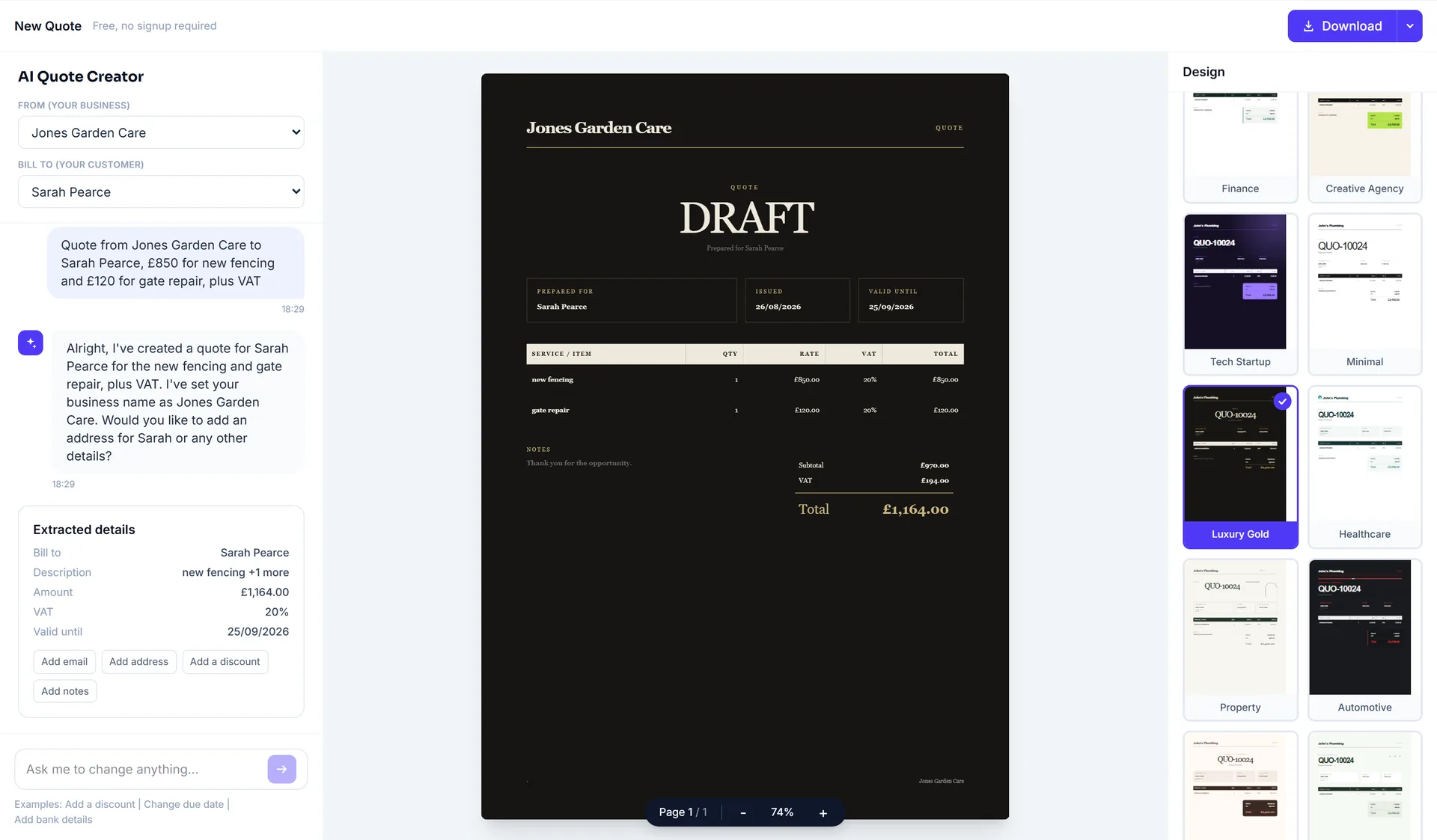
- Describe the job and the quote writes itself: type "Quote Sarah Pearce 850 for new fencing and 120 for a gate repair, plus VAT" into the AI creator and it fills in the lines, VAT and total. Or fill the boxes in yourself.
- Valid for 30 days by default, and you can change it.
- VAT in exact pence, at 0%, 5% or 20% on each line.
- Send it with an accept button (Pro): the customer opens the quote online and accepts or declines with their typed name, and you see the answer straight away.
- QuoteChaser follows up for you (Pro): a friendly check-in after 3 days and a final one after 7, stopping the moment they answer.
- Convert to invoice: one click turns an accepted quote into an invoice with the next invoice number.
Make a quote free with no sign-up, or save 3 quotes a month on the free plan.
Sources
The difference between a quote and an estimate, and why a quote fixes the price, from Citizens Advice.
Citizens Advice: problems with the cost of building work
When you must register for VAT, from HMRC.
This guide is general information, not legal or tax advice.
Questions people ask
- What's the difference between a quote and an estimate?
- A quote is a promise to do the work at an agreed price. An estimate is your best guess, and the final bill can be different.
- How long should a quote be valid for?
- 30 days is common. Go shorter if material prices are moving, and say the date on the quote.
- Should a quote include VAT?
- If you're VAT registered, show the VAT and the total including it. If you're not registered, don't add VAT.
- Can I charge more than my quote?
- Generally not, once it's accepted, unless the customer agrees to extra work. That's why a quote should say clearly what's included and what isn't.
- How do I follow up on a quote?
- A friendly check-in after about 3 days and a final one after a week. Then stop.
Read next
Written by
Matt SucklingDirector, FullDiary
Matt runs Cynical Software Ltd, the Perthshire company that makes FullDiary, and builds it.