
Guide5 minute read
No-show fees: should you charge one, and how to cut no-shows
A no-show fee only works if you can actually collect it, and chasing someone for money after they didn't turn up rarely ends well. A small deposit taken when they book does the same job, and a reminder the day before stops most no-shows happening at all.

Director, FullDiary
Every empty chair is time you can't sell again. For a solo barber or a nail tech, two or three no-shows a week is a real slice of the month's takings. So it's tempting to charge for it. Before you do, it's worth knowing what a no-show fee can and can't do.
What no-shows cost you
Work it out for your own shop: the number of no-shows in a month, times your average price. Then add the knock-on cost, the customer you turned away for that slot. Most booking systems record no-shows, so the number is usually there to look up.
Fee or deposit?
- A no-show fee is charged after they didn't come. Unless you hold their card details with their permission to charge them, you're sending a bill to someone who has already shown they don't prioritise you. Most never pay, and the ones who do won't book again.
- A deposit is paid when they book. If they don't come, you already have it. If they do, it comes off the bill. It also quietly filters out the bookings that were never going to happen.
For most small shops a deposit does everything a no-show fee promises, without the chasing.
Keeping it fair
Whether you charge a fee or keep a deposit, UK consumer law expects it to be fair. Under the Consumer Rights Act 2015 an unfair term doesn't bind the customer, and the CMA's guidance says:
- A cancellation charge should be a genuine estimate of what you lose directly.
- A non-refundable deposit should only be a small percentage of the total price.
- You're expected to take reasonable steps to cut your loss, such as filling the slot.
And the customer has to know about it before they book: on your booking page and in the confirmation, not for the first time in the message asking them to pay.
Salon cancellation policy: a template you can copy
Reminders that cut no-shows
Most people who miss an appointment didn't decide to. They forgot, or got the day wrong. That's the cheapest problem to fix:
- Remind them the day before, by email, text or both.
- Make cancelling easy. A link in the confirmation that lets them cancel or move it means they tell you, and you can fill the slot.
- Ask for 24 or 48 hours' notice and remind them before that window closes, so cancelling is still an option when they read it.
Our reminder texts guide has ten to copy.
Appointment reminder texts: 10 templates to copy
What to say when someone misses
Keep it friendly. Most no-shows are embarrassed, and a kind message keeps a customer you'd otherwise lose. Something like:
- "Hi Sam, we missed you today at 2pm. Hope everything's OK. Would you like to rebook? Here's the link: [booking link]"
- If you kept a deposit: "Hi Sam, we missed you today. As your booking said, we've kept the 10 GBP deposit. We'd love to see you again, here's the link to rebook: [booking link]"
Regulars and new customers
You don't have to treat everyone the same way. Many shops take a deposit for new customers and for the long or expensive treatments, and let trusted regulars book without one. If someone misses twice, ask for a deposit next time.
Cutting no-shows with FullDiary
- Deposits per service, on every plan: a deposit, the full price or nothing, paid by card through your own Stripe account, with no commission.
- Reminder emails on every plan, the day before by default, and reminder texts on Pro: 50 texts a month for each person on the plan.
- Cancelling from the confirmation, outside your cancel window; inside it, the page tells them to ring you.
- No show is one tap in the diary, and a no-show stays on the customer's record, so you can see who has missed before.
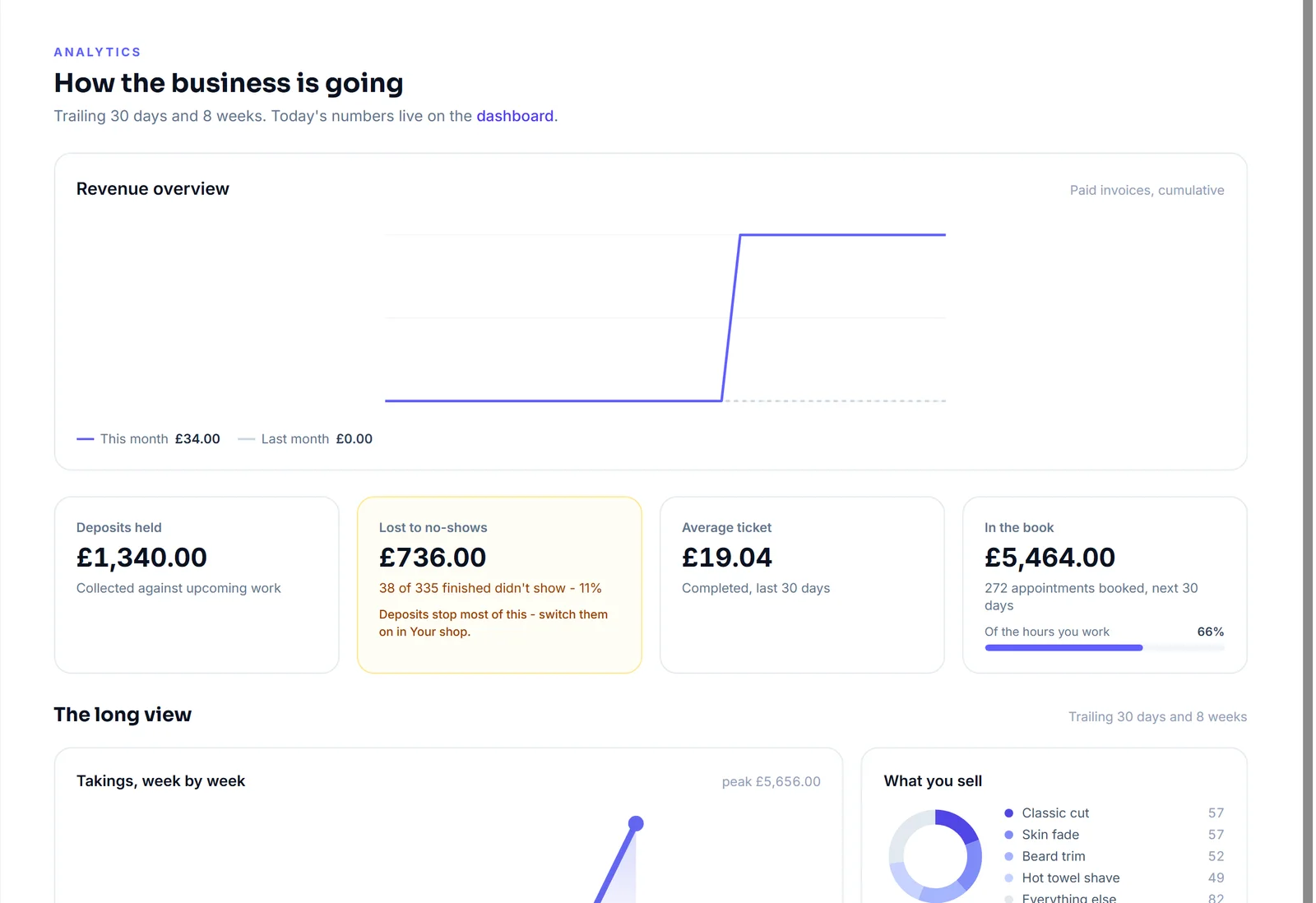
- Analytics shows the cost: what no-shows lost you in the last 30 days and your no-show rate. Once you have ten finished bookings each way, it shows how often deposit-paid bookings were no-shows against those without.
Deposits, reminder emails and Analytics are on every plan, free included.
Deposits and payment when customers book
Sources
Part 2 of the Consumer Rights Act 2015: an unfair term in a consumer contract doesn't bind the consumer.
Consumer Rights Act 2015, Part 2: unfair terms
Small deposits, charges as a genuine estimate of loss, and reducing the loss, from the Competition and Markets Authority.
CMA: cancelling goods or services
This guide is general information, not legal advice.
Questions people ask
- Can I charge a customer who doesn't turn up?
- Only if they agreed to it before booking and the charge reflects what you actually lose. Collecting it afterwards is the hard part, which is why most shops take a deposit instead.
- Is a deposit better than a no-show fee?
- For most small shops, yes. You hold the money already, it comes off the bill when they come, and it puts off the bookings that were never going to happen.
- How big should a deposit be?
- Small compared with the price. The CMA says a non-refundable deposit should only be a small percentage of the total, so most shops ask for a fixed amount or part of the price.
- What's the best way to reduce no-shows?
- A reminder the day before, an easy way to cancel, and a deposit for new customers and long appointments.
Read next
Written by
Matt SucklingDirector, FullDiary
Matt runs Cynical Software Ltd, the Perthshire company that makes FullDiary, and builds it.