Guide6 minute read
Starting a nail business from home: a UK checklist
Doing nails from home keeps your costs low, but there are a few things to sort before the first client sits down. Check whether your council needs a licence, tell HMRC, get insured, and set up a room that's safe to breathe in all day.

Director, FullDiary
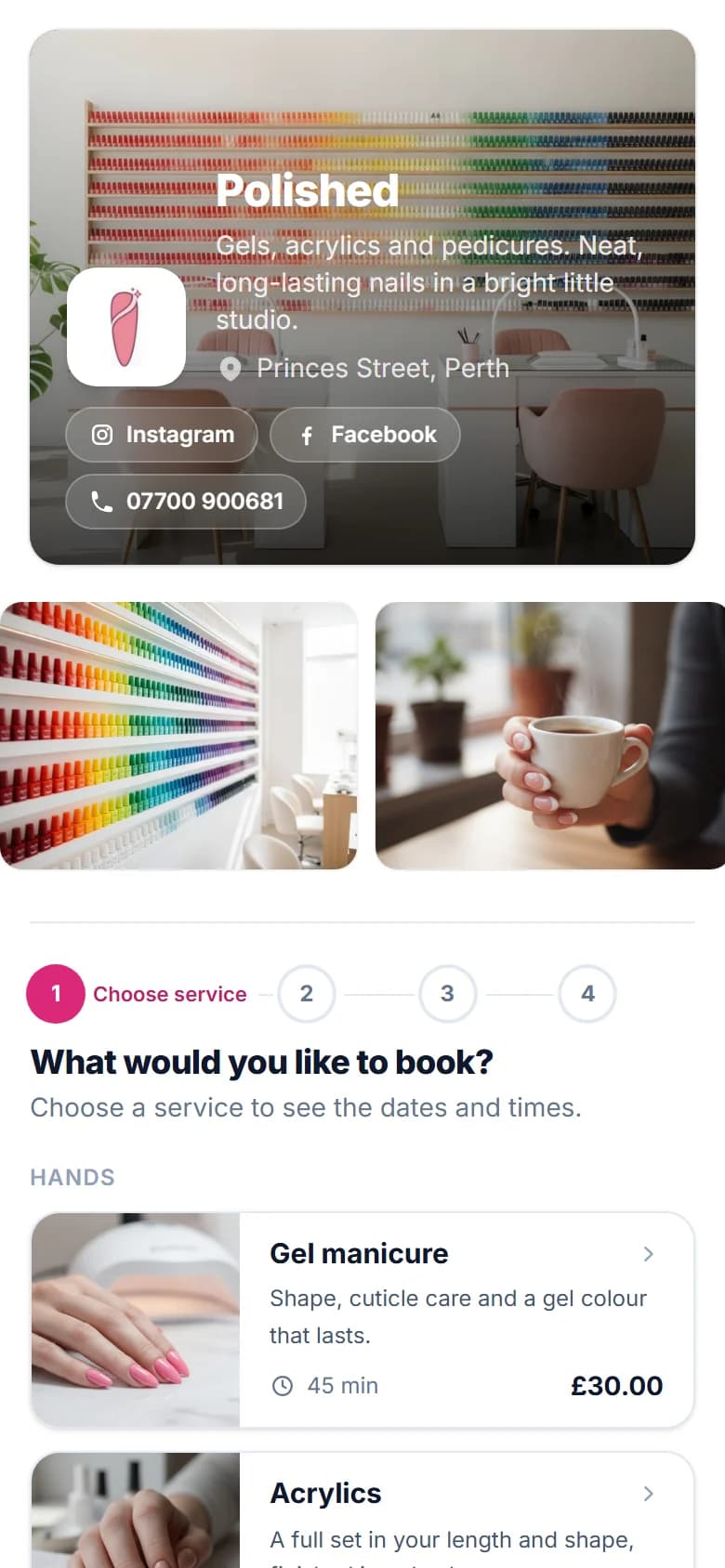
A spare room, a good lamp and a desk can be the start of a proper business. Most of what follows takes an afternoon of phone calls and forms. Do it before you take your first booking, not after.
Do you need a licence?
- In London, manicure is one of the special treatments in the London Local Authorities Act 1991, so most boroughs need the premises to hold a special treatment licence. Kingston, for example, lists manicure, pedicure and nail extensions, while fully mobile services in clients' homes are exempt. Ask your borough whether a room in your own home needs one.
- In the rest of England, there's no general licence for nails, and the tattoo and piercing licence doesn't cover them. Some councils have their own local rules, so check with yours.
- In Wales, the special procedures licence covers acupuncture, piercing, electrolysis and tattooing, not nails.
- In Scotland, nails are outside the new licensing for non-surgical procedures, but some councils license nail salons in other ways. Ask yours.
Your council's own website is the place to start, and gov.uk finds it from your postcode.
gov.uk: find your local council
Planning and business rates
You don't usually need planning permission to work from home. The Planning Portal says you probably do if any of these are true:
- Your home is no longer mainly a home.
- There'll be a big rise in traffic or people calling.
- The business is unusual for a residential street.
- It disturbs the neighbours at unreasonable hours, or creates noise or smells.
Business rates are separate. You may have to pay them on top of council tax if clients visit you to buy a service, or if you've altered part of your home for the business, like a garage turned into a salon. Using a small part of your home, like a bedroom office, usually doesn't count, but clients visiting can change that, so check with the Valuation Office Agency. In England, a property with a rateable value of 12,000 GBP or less gets small business rate relief, which can bring the bill to nothing.
Insurance
- Employer's liability is compulsory from the day you employ someone, with at least 5 million GBP of cover. On your own, you don't need it.
- Public liability and treatment cover aren't required by law, but they're what pays out if a client has a reaction or trips on your step. Insurers expect you to be trained, and the NHBF warns that without proper training your cover may not be valid.
- Your home insurance may not cover business equipment or clients visiting, so tell your insurer.
- Your mortgage lender or landlord may need to agree to you running a business from home.
Register with HMRC
- You can start trading as a sole trader straight away.
- The first 1,000 GBP you earn from trading in a tax year is tax-free under the trading allowance.
- Earn more than that and you register for Self Assessment, by 5 October after the end of the tax year you started.
- Keep a record of every payment in and every cost, from polish to the lamp.
- Making Tax Digital for Income Tax applies once your income passes 50,000 GBP, falling to 30,000 GBP from April 2027 and 20,000 GBP from April 2028.
Your room: ventilation and products
The HSE says acrylic liquids and powders can cause skin allergies and asthma, filing dust can cause wheezing, and solvents can cause dermatitis. You'll breathe this all day, so the room matters more than the decor.
- Extraction at the desk. A downdraught table or a movable extractor, with the client's nails over it or close to it.
- Good general ventilation, with the air taken outside or filtered, not just a fan moving it round.
- Lids back on straight away, and used wipes and tips in a lined bin with a lid.
- Nitrile gloves, single use, and eye protection when you file.
- Look after your hands. Wash, dry and moisturise them, and watch for any rash.
Setting prices
- Time each service properly, including the soak-off and the chat, not just the polish.
- Add up what each one uses, such as polish, gel, tips, files, wipes and gloves.
- Spread your fixed costs, such as insurance, the lamp, the extractor and your booking system, over a normal month.
- Look at what other nail techs near you charge, then price for the work, not to be the cheapest.
- Show the whole price on your list, so nobody gets a surprise at the end.
Taking bookings and deposits, with FullDiary
- Free for one person, with 20 bookings a month, your own booking page and link, and the diary on the website and in the FullDiary app.
- Deposits on every plan, paid by card through your own Stripe account, so a no-show doesn't cost you the whole slot. FullDiary takes no commission.
- Reminder emails go out before every booking, so fewer people forget.
- Forms ask your patch test and consultation questions when clients book, signed and dated.
- When you're busier, Pro is 9.99 GBP a month for one person, with unlimited bookings and 50 texts a month for reminders.
Start free, with no card.
Sources
Manicure as a special treatment in London.
London Local Authorities Act 1991, section 4
Special treatment licences, and contacting your council.
gov.uk: massage and special treatment premises licensing
A London borough's licence, covering manicure, pedicure and nail extensions.
Kingston Council: massage and special treatment licences
The licence for tattooing, piercing and electrolysis, which doesn't cover nails outside London.
gov.uk: tattoo, piercing and electrolysis licence
The special procedures licensed in Wales.
Public Health (Wales) Act 2017, section 57
When working from home needs planning permission, in England.
Planning Portal: working from home
When a home business pays business rates.
gov.uk: business rates, working at home
Small business rate relief.
gov.uk: small business rate relief
Employer's liability insurance.
gov.uk: employers' liability insurance
Home insurance, and your mortgage lender or landlord.
gov.uk: running a business from home
Training, qualifications and your insurance.
NHBF: setting up your own beauty business
Becoming a sole trader.
The 1,000 GBP trading allowance.
gov.uk: tax-free allowances on trading income
When Making Tax Digital for Income Tax applies.
gov.uk: Making Tax Digital for Income Tax
The health risks of nail products, and controlling them.
Extraction, ventilation, gloves and waste for nail work.
HSE: SR13 nail bars and other beauty services
The data protection fee for sole traders who keep client details on a phone or computer.
ICO: data protection fee questions
This guide is general information, not legal, tax or insurance advice.
Questions people ask
- Do I need a licence to do nails from home?
- In London, manicure is a special treatment, so most boroughs need a special treatment licence. England outside London and Wales have no general nail licence, and some Scottish councils license nail salons, so check with yours.
- Do I need planning permission for a nail room at home?
- Usually not. You probably do if your home stops being mainly a home, or clients coming and going disturbs the street or the neighbours.
- When do I need to tell HMRC?
- Once you earn more than 1,000 GBP from trading in a tax year. Register for Self Assessment by 5 October after that tax year ends.
- What insurance does a home nail technician need?
- Only employer's liability is compulsory, and only with staff. Public liability and treatment cover protect you, and tell your home insurer.
- Do I need to pay the ICO fee?
- Usually, if you keep clients' details on a phone or computer. For most small businesses it's 52 GBP a year, or 47 GBP by direct debit.
Read next
Written by
Matt SucklingDirector, FullDiary
Matt is a software engineer with over 15 years of experience. He started FullDiary to build a fairer booking system, and he still builds it himself.