
Guide6 minute read
Salon insurance: what cover a hair or beauty business needs
Only one kind of business insurance is compulsory, and only once you employ someone. The rest is up to you, but one client with a burnt scalp can cost more than years of premiums. Here is what each cover does, and what insurers ask of you in return.

Director, FullDiary
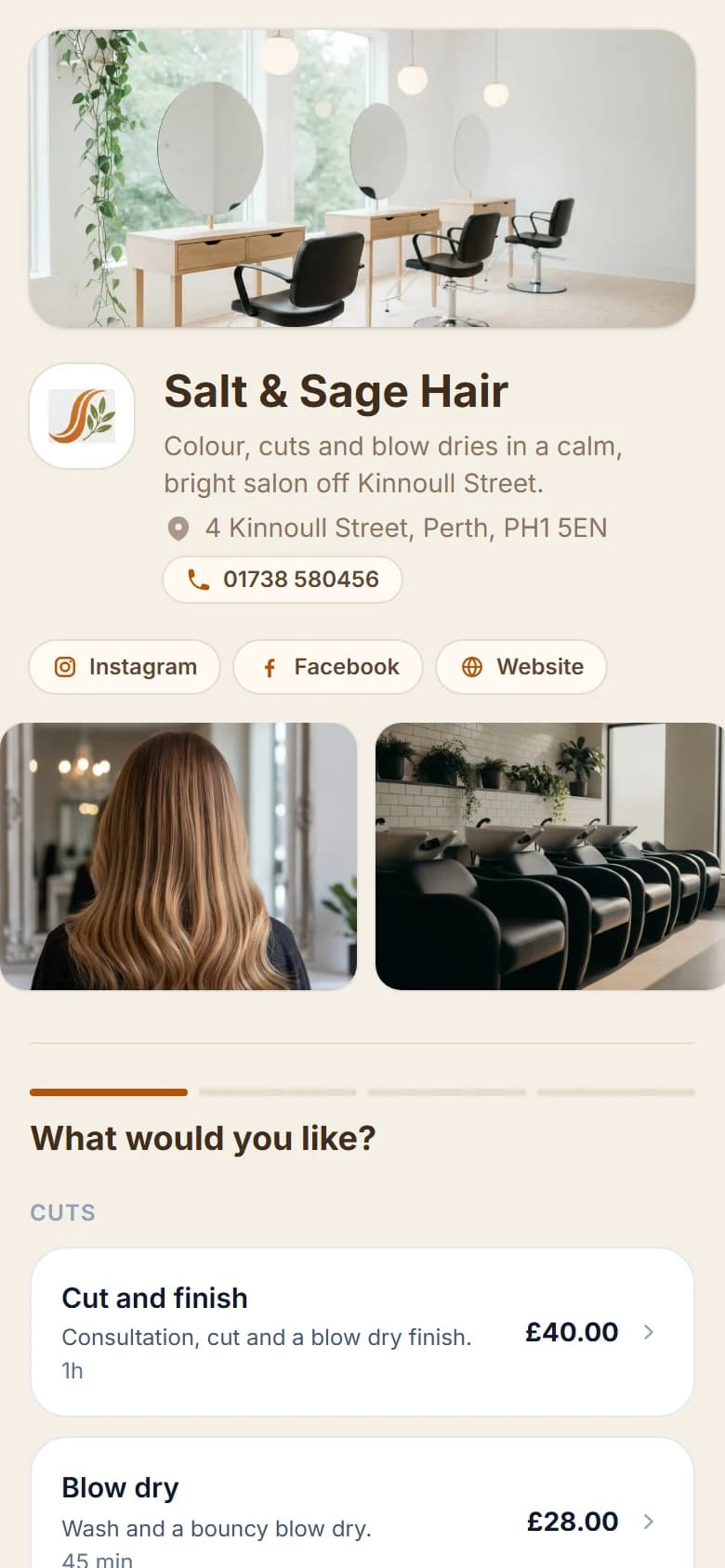
Insurance is the part of running a salon nobody enjoys sorting out. Most of it isn't required by law. It's still worth getting right before you open, because the claims that hurt a small salon are a client's reaction or an accident in the chair, and those are the ones you'd struggle to pay yourself.
The one that's compulsory
Employer's liability insurance pays if someone who works for you is hurt or made ill by their work and claims against you. It's the only cover the law makes you hold, and only once you employ someone.
- You need it from the day you take someone on, with at least 5 million GBP of cover. Most insurers offer 10 million GBP.
- You don't need it if you work alone. Nor do you if everyone you employ is a close relative, unless the business is a limited company.
- A self-employed stylist or renter can still count as your employee for this. Their tax status doesn't decide it, the way you really work together does.
- Put the certificate up where your staff can read it, on paper or electronically, as long as they know where to find it.
- Going without can cost up to 2,500 GBP for every day you aren't covered, and not showing the certificate up to 1,000 GBP.
Public liability
Public liability pays compensation if anyone other than your staff is hurt, or their property is damaged, because of your business. A client who slips on a wet floor is the classic claim. It isn't a legal must for a salon, but the NHBF calls it essential. If clients come to your home, you need it just as much as a high street salon does.
Treatment risk
Treatment risk, also called treatment liability, is the cover that matters most in hair and beauty. It pays when the treatment itself harms a client, like a reaction to a tint, a chemical burn or a lash glue allergy. Make sure your policy includes it and names every treatment on your price list.
- It only covers treatments you're qualified to do. The NHBF says a regulated qualification is what insurers look for, and a course that isn't accredited may not be enough.
- Treatments above level 3, like microblading, chemical peels, laser and IPL, need extra cover.
- Anyone renting a chair or room from you needs their own qualifications, or their insurance won't cover them.
Products liability
Products liability covers injury or damage caused by a faulty product you supply, such as the shampoo or serum you sell over the counter. You can be liable even though you didn't make it. It often comes with public liability, so check whether yours already has it.
Contents, equipment and lost income
- Contents cover pays to repair or replace your chairs, basins, dryers and stock if they're damaged or stolen. Check whether it pays for new, or only what they were worth after wear and tear.
- The building is your landlord's to insure if you rent, so read your lease.
- Business interruption pays the profit you lose, and the extra costs, while you can't trade after something like a fire or a flood. It's usually an optional extra, so ask for it.
- Working from home? Your home insurance probably won't cover business equipment or clients visiting, so tell your insurer.
If you go mobile
- Tell your car insurer. Social and commuting cover doesn't include driving to clients, and you need business use, or a claim can be refused.
- Check your public liability and treatment cover include working in clients' homes, and anywhere else you work.
- Ask whether your kit is covered in the car and at clients' homes, not just at a salon.
What insurers ask you for
Treatment cover comes with conditions. Break them and a claim can be turned down, so read the policy wording. The NHBF's allergy alert test system, written to meet insurers' rules, asks for these.
- An allergy alert test at least 48 hours before a new client's colour.
- A fresh test for a returning client after six months, after a tattoo or black henna tattoo, or when you change colour brand.
- A consultation before colour, bleach, a perm or a relaxer.
- A written record of every test, signed by the client and kept for at least six years.
- Staff qualified for each service they do, and any who aren't declared to your insurer.
Beauty insurers ask for the same kind of thing, with consultation forms and aftercare advice. If a client has a reaction, tell your insurer straight away.
Questions to ask before you buy
- Does it cover every treatment on my price list, by name?
- What qualifications do you need from me and my staff?
- What records do you expect me to keep, and for how long?
- Am I covered in clients' homes and at events?
- Does it cover a renter in my salon, or do they need their own?
- Does contents cover pay for new, and is business interruption included?
Patch tests and consent forms, with FullDiary
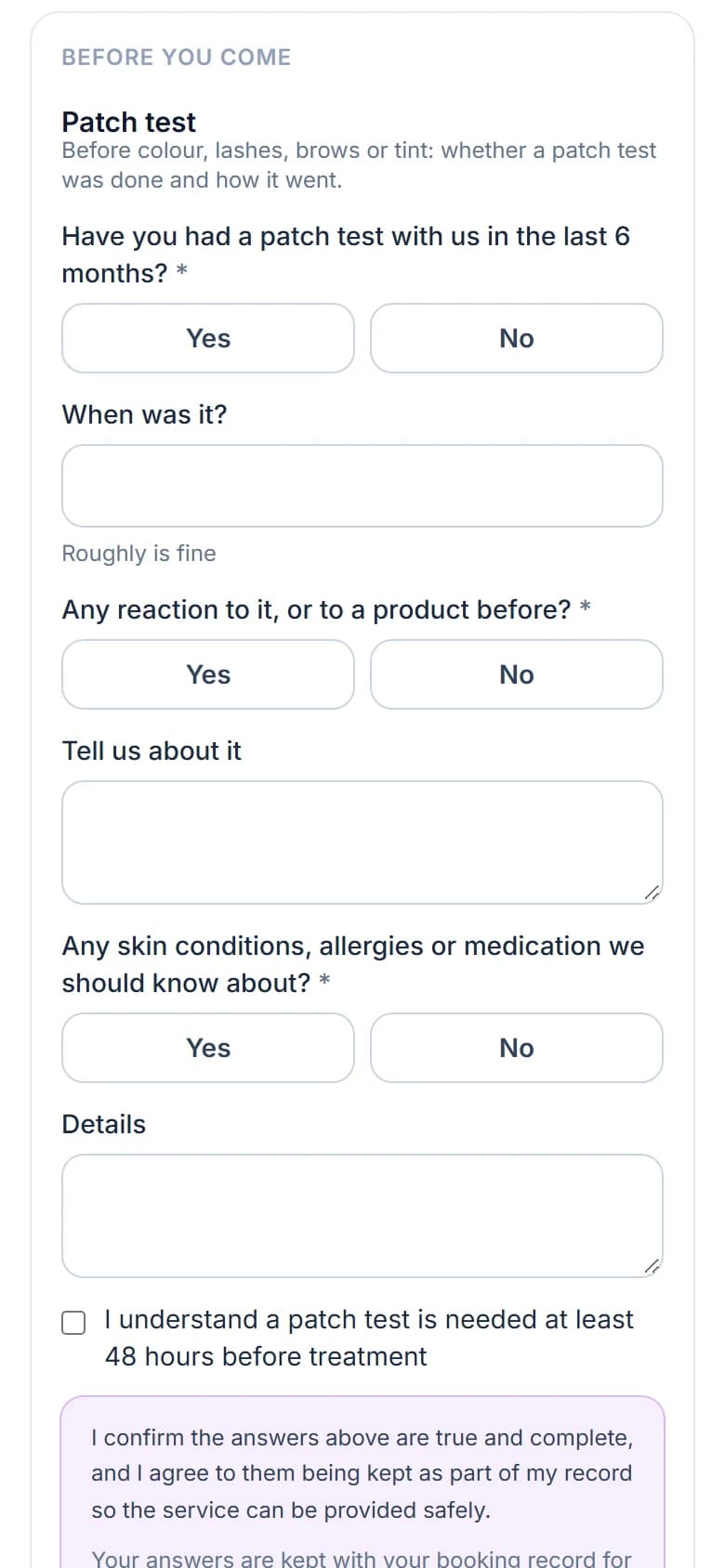
- Forms on every plan. Patch test and consultation forms are asked when clients book, signed with a typed name and dated. The patch test form asks on the first visit and again after 180 days.
- Answers on their profile, so you can show your insurer what a client told you and when.
- Visit records keep what you did at each visit, such as the colour formula and the products used.
- Free for one person, with 20 bookings a month, your own booking page and the FullDiary app.
See how forms work.
Help: patch tests, consent forms and questionnaires
Sources
Who needs employer's liability, the 5 million GBP minimum, the certificate and the fines.
HSE: employers' liability insurance, a brief guide for employers
Employer's liability, from the day you become an employer.
gov.uk: employers' liability insurance
What public liability covers, and that it isn't compulsory.
ABI: public liability insurance
Public liability as essential, cover for every treatment you offer, and extra cover above level 3.
NHBF: setting up your own beauty business
Qualifications, insurers and renters.
NHBF: qualifications and training
What products liability covers.
ABI: product liability insurance
Products liability with public liability, and home insurance when you work from home.
MoneyHelper: business insurance when you're self-employed
Contents cover, new for old, and buildings when you rent.
ABI: commercial property insurance
What business interruption pays.
ABI: business interruption insurance
Business use on your car insurance.
MoneyHelper: five fibs that could invalidate your car insurance
Allergy alert tests, consultations, records and qualifications, for insurance.
NHBF: setting up an allergy alert testing system
Telling your insurer about a reaction.
NHBF: allergy alert tests and your insurance
A beauty body's insurance conditions: qualifications, patch tests, consultation forms and aftercare.
BABTAC: insurance pre-requisites
This guide is general information, not legal or insurance advice.
Questions people ask
- Is salon insurance a legal requirement?
- Only employer's liability, and only once you employ someone. Public liability and treatment cover aren't required by law, but they're what pays out if a client is hurt.
- What's the difference between public liability and treatment risk?
- Public liability covers accidents, like a client slipping on a wet floor. Treatment risk covers harm from the treatment itself, like a reaction to a tint.
- Will my insurance pay if a client reacts to hair dye?
- Treatment cover is for exactly that, as long as you met its conditions. Most ask for an allergy alert test 48 hours before, a consultation and a signed record of the test.
- Do I need employer's liability for a chair renter?
- Possibly. Being self-employed for tax doesn't settle it. If in practice you control how and when they work, they can count as your employee.
- Do mobile hairdressers need different insurance?
- You need business use on your car insurance, and public liability and treatment cover that include working in clients' homes.
Read next
Written by
Matt SucklingDirector, FullDiary
Matt is a software engineer with over 15 years of experience. He started FullDiary to build a fairer booking system, and he still builds it himself.